Published · Bloom & Baby Editorial Team
Newborn Sleep: A Gentle Guide to the First 12 Weeks
Why newborn sleep looks nothing like adult sleep, and the small routines that help everyone rest a little more.
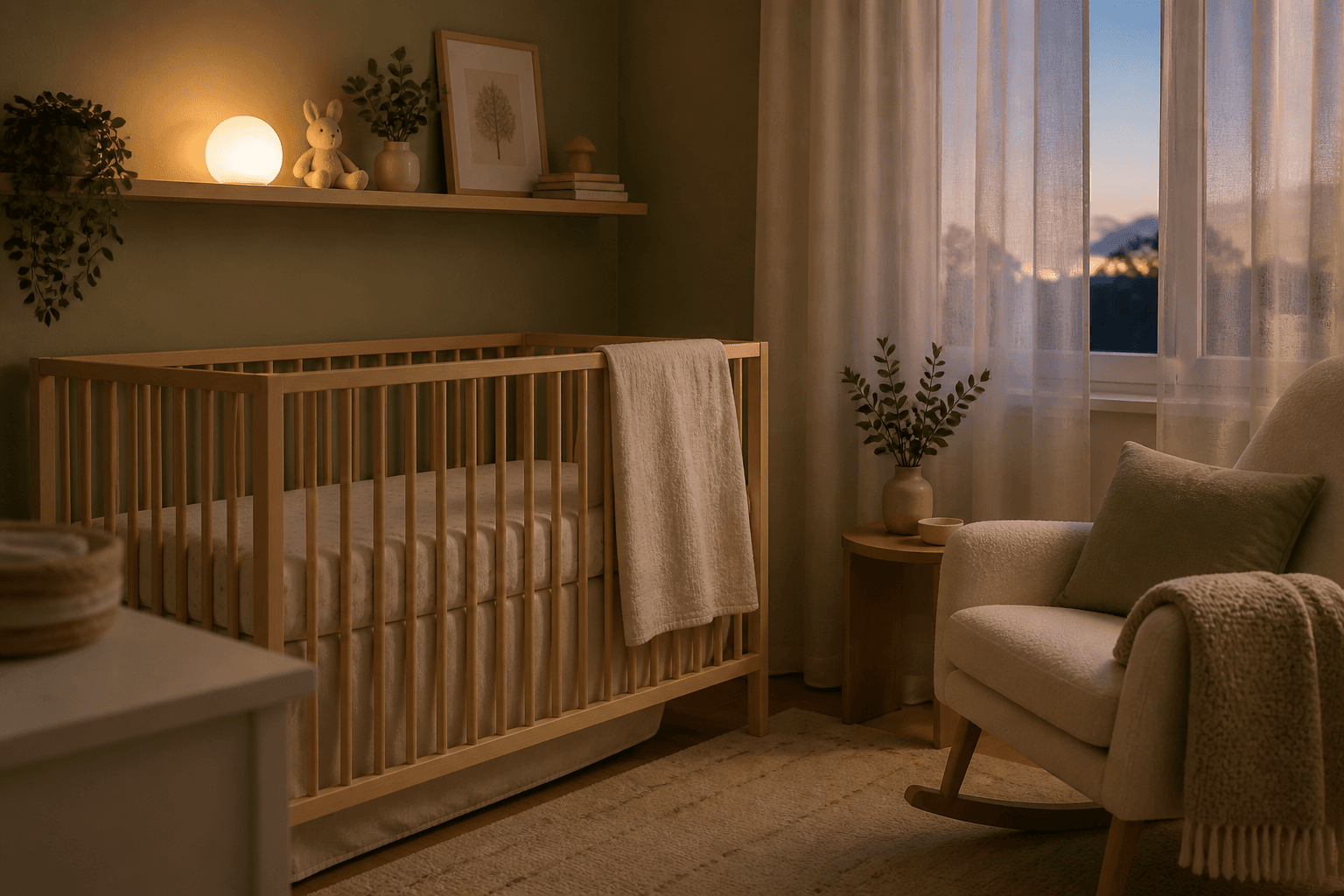
Newborn sleep is not broken adult sleep. It is its own pattern, built around a stomach that empties every couple of hours and a body clock that has not been set yet. Knowing what is normal makes the first twelve weeks feel far less like something has gone wrong.
What newborn sleep actually looks like
Most newborns sleep somewhere between 14 and 17 hours across a full day, broken into stretches of two to four hours. Those stretches are scattered across day and night in no particular order for the first several weeks. Short sleep cycles are normal and protective at this age, not a sign of a problem.
Day and night are learned, not born
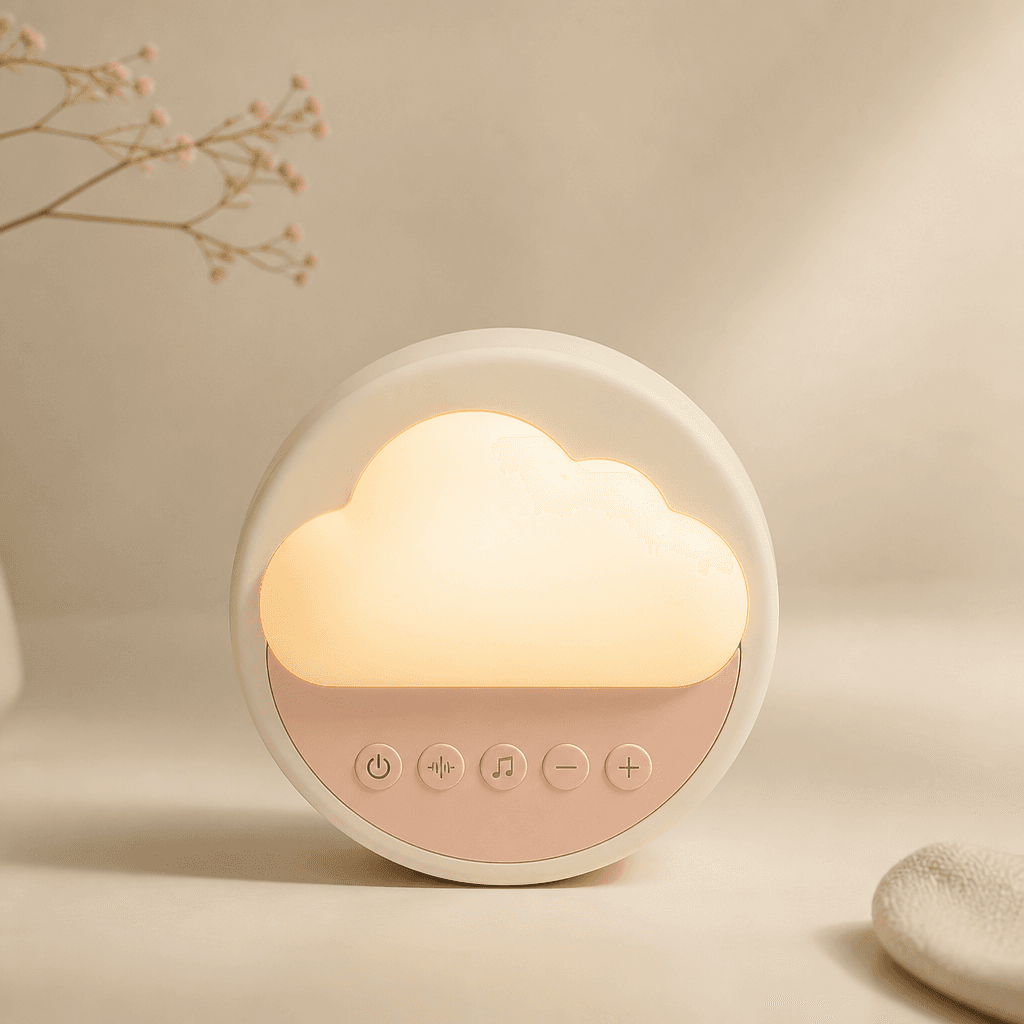
Babies are not born knowing that night is for sleeping, but you can help that rhythm along. Keep daytime feeds bright, chatty and social, and keep night feeds quiet, dim and deliberately boring. A warm, dimmable nightlight is far kinder than an overhead light at 3am, and steady white noise helps mask the household sounds that wake light sleepers.
Wake windows in the first 12 weeks
In the early weeks, most newborns can only stay comfortably awake for about 45 to 90 minutes at a time, including the feed. Watching your baby beats watching the clock: red eyebrows, a faraway stare, jerky movements and fussing usually mean the window is closing. Settling before that point is almost always easier than settling after it.
A wind-down routine that travels
A routine does not need to be elaborate to work. A short bath, a soft hooded towel, a slow massage with a gentle balm, a feed, then the same light and sound every night gives your baby a repeatable signal. Keep it simple enough that you could do the whole thing in a hotel room or at a grandparent's house, because eventually you will.
Safer sleep basics
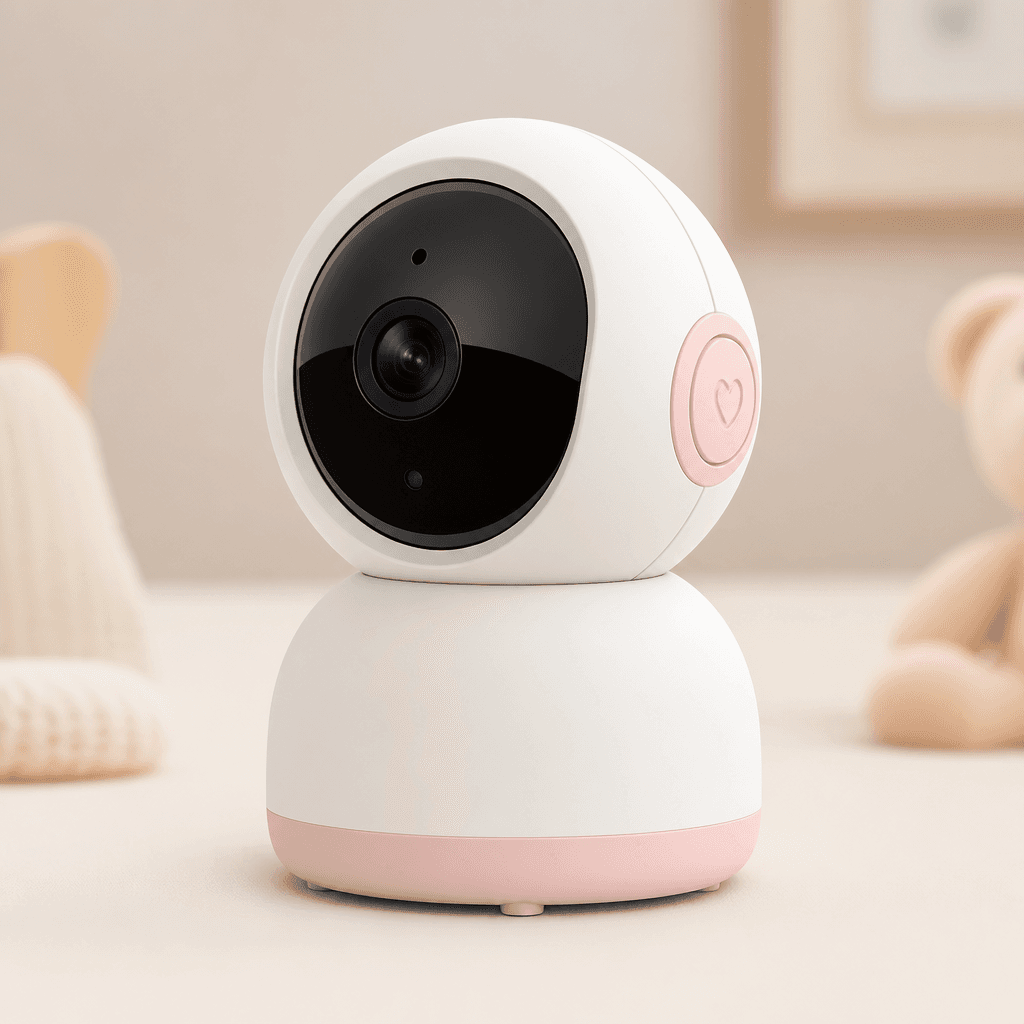
Guidance is consistent across most health bodies: place baby on their back to sleep, on a firm flat surface with a fitted sheet and nothing else in the sleep space. Room sharing without bed sharing is widely recommended for the early months. A video monitor does not replace any of that, but it does let you step out of the room and still check in.
Every baby is different, and any sleep pattern that worries you is worth raising with your pediatrician or health visitor. This article is general guidance, not medical advice.
Frequently asked questions
- How much do newborns sleep?
- Most newborns sleep about 14 to 17 hours across a 24-hour day, in stretches of roughly two to four hours. Those stretches are spread across day and night for the first several weeks.
- How long should a newborn stay awake between naps?
- In the first 12 weeks, most newborns are comfortable awake for around 45 to 90 minutes at a time, including the feed. Sleepy cues like a faraway stare or jerky movements are a better guide than the clock.
- When do babies start sleeping longer at night?
- Longer night stretches often begin somewhere between 8 and 12 weeks, though the range is wide and progress is rarely a straight line. Consistent light, feeding and wind-down cues help the rhythm develop.